Data
The FCC’s STB Proposal Will Hinder Innovation, Increase Prices, and be Detrimental to Consumer Welfare
Gamers Poll
Closing the Digital Divide 2.0
The Trump Trust Gap
By: Mike Montgomery
There is no question that Donald Trump is driving the narrative for the 2016 presidential election, with every other candidate relegated to co-stars. Trump’s challenge is whether along the way he burns so many bridges that he’s unelectable.
Whatever the strategy, fundamental to a candidate’s success is getting the voters to trust you. So, is Trump trusted? A new survey says no.
By sizable margins, voters say that in a hypothetical race between Hillary Clinton and Donald Trump, they trust Clinton more. And that is bad news for our country. We need candidates who are trusted and inspired. Trump’s bombastic ways are burning bridges, and while Americans trust Clinton more, she has her own trust issues partially fueled by the ongoing controversy over her State Department emails.
My tech advocacy organization, CALInnovates, sponsored a poll by Vrge Analytics of 806 Americans. We asked them to decide, in a hypothetical election between Trump and Clinton, who they trusted more on specific issues.
As a non-partisan group, offering an endorsement isn’t our aim here. We hope to eventually see concrete proposals from candidates from both major parties outlining how they intend to spur innovation and support entrepreneurship and the new economy in the U.S. if elected. The person who sits in the Oval Office not to sets the agenda but can push policies that can help or hurt entrepreneurs.
On the question of overall trust, 47% of respondents said they trust Clinton more while only 27% trust Trump more. Women were more likely to trust Clinton than Trump but while 34% of male respondents chose Trump, 40% chose Clinton.
Donald Trump Has Work to Do to Gain Americans’ Trust as Would-Be GOP Nominee, According to New CALinnovates Survey
SAN FRANCISCO, March 9, 2016 /PRNewswire-USNewswire/ — Donald Trump’s bombastic ways have pushed him to the precipice of seizing the GOP nomination for president, but Americans don’t trust him to do almost anything – from managing the economy to picking a Supreme Court nominee to handling the dispute between the FBI and Apple over an iPhone of a shooter in a mass killing with terrorist implications, according to a new survey commissioned by tech advocacy group CALinnovates.
“As Americans start to focus on the presidential election, the winner will make critical decisions about the future of the sharing economy, national security and technology and privacy,” said Mike Montgomery, Executive Director of CALinnovates. “CALinnovates isn’t in the business of political endorsements, but we are anxious to learn more about the plans candidates – whomever the nominees may ultimately be – have for ensuring American leadership on innovation and entrepreneurship.”
When a Vrge Analytics survey of 806 Americans pitted Donald Trump against Hillary Clinton in a hypothetical presidential race, the results weren’t pretty for the blustery businessman:
As the Future of Music Streaming is Decided, Americans Say that Labels and Industry Groups Should Get Smaller Piece of Revenue Pie
SAN FRANCISCO, Dec. 15, 2015 /PRNewswire-USNewswire/ — As the Copyright Royalty Board prepares to weigh in on the future of online music royalty rates, by a 4-1 ratio Americans think that labels and industry groups should get a smaller piece of the revenue pie according to a new CALinnovates survey.
The survey of 1,092 Americans found that 53 percent believe that “labels and industry groups should get a smaller slice of the pie so the artists and streaming companies can make a living.” That is compared to only 12 percent of Americans who said, “streaming companies should be forced to pay more so that the labels and industry groups can keep their share.”
At stake with the pending Copyright Royalty Board is how revenues from online music should be divvied up. Music labels and performing rights organizations have argued that streaming companies should have to pay more, while others have argued that the labels and industry groups should loosen their hold on the industry so that streaming companies can continue to innovate, which will benefit the entire music ecosystem.
One thing is clear: Americans want to see songwriters and artists get paid. 78 percent said musicians should make the most money from the sale of streaming music. They also put the labels and industry groups last in the order of priority: only 9 percent believe they should make the most money from streaming music.
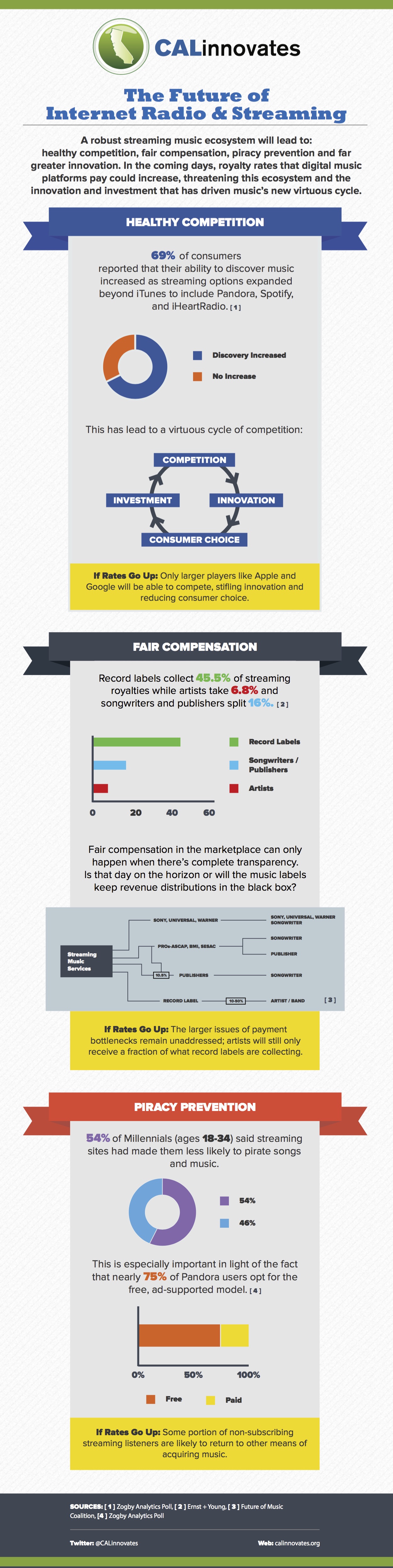
The Future of Internet Radio and Streaming
(Click Image to Enlarge)
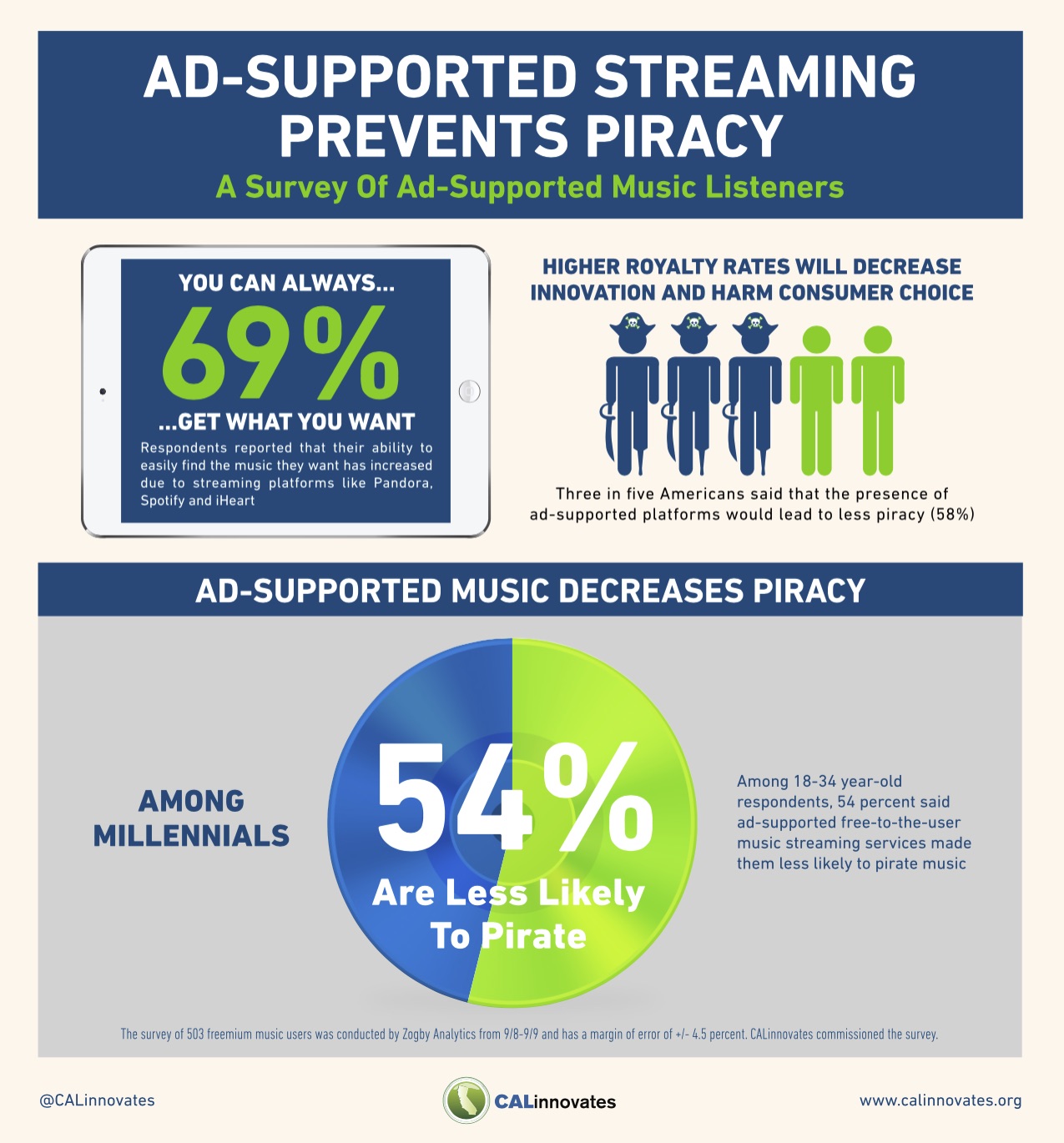
Protect the Future of Online Radio
(Click Image to Enlarge)
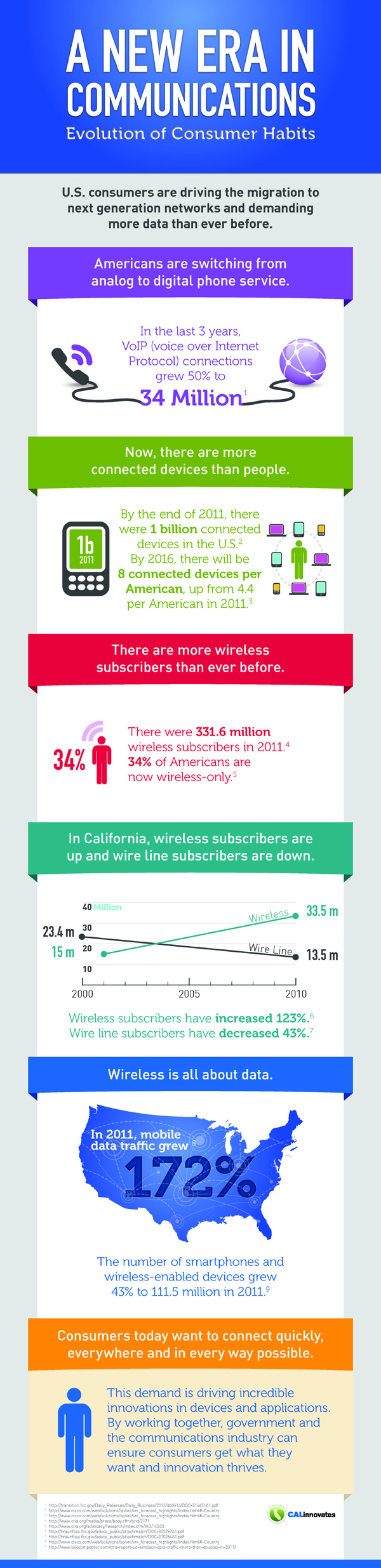
A New Era in Communications: Evolution of Consumer Habits [INFOGRAPHIC]